
Step 1 of 5 · Intro to Marketing

Briefing

Product context, segment, founder lens

Founder's notebook with brand sketches, color swatches, and a coffee — the first hour of building a brand
Intro to Marketing · Your Brand, Round 1

Launch a brand. Make it fit.

You’re the founder of a brand that doesn’t exist yet. Four rounds, one product, one segment, one position — and a rules-based engine that grades you on whether they all sound like the same brand.

A note before you start

To: the next four weeks of you
From: the simulation
Re: what this is, and isn’t

This is Principles of Marketing packed into four rounds. You’ll do the work a founder does in their first ninety days: pick a market, name a brand, set a price, write a campaign. No spreadsheets to build. No elasticity curves to model. Just the calls — and the consequences of how they fit together.

The thing being graded is not how clever any single move is. It’s whether the whole plan sounds like it came from the same brand. We call this coherence, and the engine that scores you is built around it. A premium price on a value-led buyer is a contradiction. A Hero archetype that runs discount promotions every round is a contradiction. Caregiver brand voice with influencer-heavy spend is a contradiction. The simulation will catch every one of them, every round.

Two things to internalize before you make a decision. First: Round 1 locks in what coherence means for everything after. The customer segment and product category you choose in Round 1 are the standard every later round is measured against. Choose carefully — you live with it. Second: same segments, different names. The four customer segments are the same across snacks, sneakers, and skincare. Each category gives them category-specific persona names, but the buying logic doesn’t change. Learn the four segments and you learn every category.

Read on. Then build something that hangs together.
What You’re Inheriting

You're not optimizing an existing brand — you're building one from a blank page. The shape of the run is fixed; what goes inside it is yours.

Product categories

3

snacks · sneakers · skincare — pick one in Round 1

Customer segments

4

same four segments across all categories

Brand archetypes

4

based on Carl Jung — Hero · Sage · Explorer · Caregiver

Rounds to compete

4

Segmentation · Brand · Pricing · Promotion

The Four Rounds

One brand, one strategy, four decisions. Each round is a calendar of the founder's first ninety days — and every later round is graded against the choices of the earlier ones.

R1

Segmentation, Targeting, Positioning (STP)

Choose product category, target a customer segment, write a positioning statement. The decisions you make here lock in what coherence means for every round after.

R2

Product & Brand

Pick 2–5 product features, name the brand, choose a brand archetype. Features must serve the segment; archetype must fit its psychology.

R3

Pricing

Set price point and strategy. Price has to land inside the band the segment will pay; strategy has to match what you've already promised.

R4

Promotion & Place

Allocate $50K across 5 promotional channels (the IMC mix), pick 1–4 distribution channels, write a promo message. The channels and message either complete the brand or contradict it.

The Numbers We’ll Be Watching

Four metrics show up at the top of every results page. They are not equally important; read them in this order.

Coherence Score

The headline metric. How tightly your decisions agree with one another, round over round.

Segment Fit

How well your product, price, and message match the segment you targeted. Drift here is what most penalties measure.

Brand Strength

Built from archetype clarity, voice, and IMC alignment. Low strength means students could swap your brand with any other.

Profit

The financial outcome. Premium pricing wins it on margin; penetration wins it on volume; mismatched pricing wins nothing.

The Vocabulary You’ll Need

Six terms that show up in every later section, the playbook, and the results page. Skim now, refer back as needed.

STP

Segmentation, Targeting, Positioning. The Round-1 frame — divide the market, pick a segment, write a statement.

Coherence

The single metric the engine grades. How well your segment, archetype, price, and promotion agree with one another.

Brand Archetype

A brand-personality framework based on Carl Jung's twelve archetypes, simplified to four. Hero, Sage, Explorer, Caregiver — each pairs cleanly with only some segments.

Positioning

One sentence: who it's for, what need it meets, how it's different. Locks in Round 1, governs everything downstream.

IMC

Integrated Marketing Communications. The mix of paid, owned, and earned channels. Five vehicles, one $50K budget in R4.

Coherence Penalty

The score deduction for contradictions — premium pricing with a value segment, Hero brand voice with discount-heavy promo, etc.

How This Simulation Plays

Three structural facts that govern almost every decision you'll make. If your strategy fights any of these, your strategy is wrong.

Coherence over Cleverness

The highest-scoring plans aren't the ones with the cleverest single move. They're the ones whose product, price, archetype, and promo all sound like they came from the same brand.

Same Segments, Different Names

Each category gives the four customer segments different persona names, but the underlying buying logic is the same. Learn the four — trend-led, value-led, loyalist, convenience-led — and you learn every category.

Round 1 Locks the Standard

The customer segment and product category you pick in Round 1 are the standard every other round is graded against. Choose for the strategy you can actually execute, not the one that sounds the most ambitious.

Pick Your Category

You'll choose one product category in Round 1. Each carries its own personas, feature menu, distribution channels, and price band — but the strategic mechanics are identical across all three. Pick the category you have the strongest intuition for.

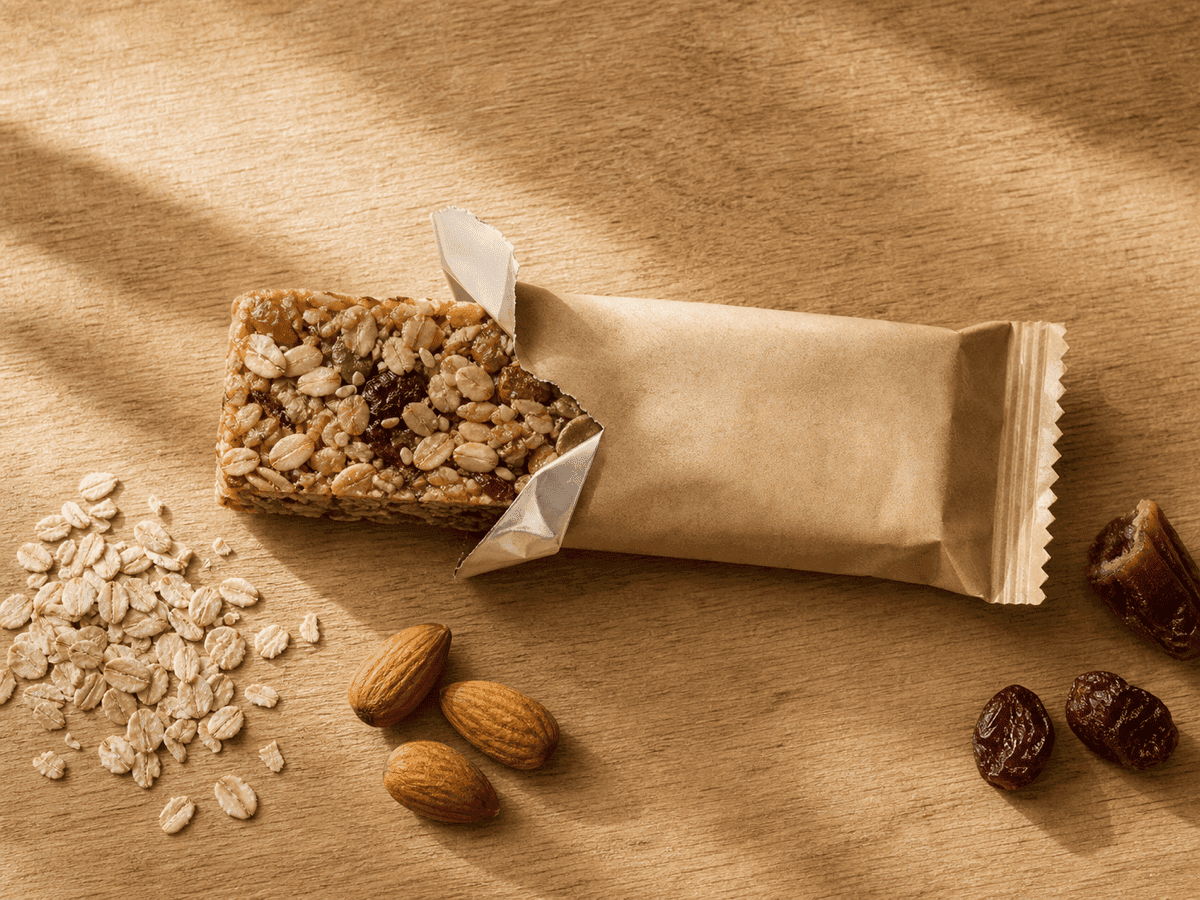
Unbranded healthy snack bar with oats and almonds on a honey-toned surface

Grocery · Repeat-Purchase

Healthy Snack Bar

You're launching a protein-dense, low-sugar snack bar into a crowded grocery aisle. The category leaders are RXBAR, KIND, Perfect Bar, and Larabar — pick the segment you can win and the marketing plan that backs it.

Price band: $1.49–$4.99

Unbranded sage running sneaker on a warm cream studio surface

Apparel · Considered Purchase

Indie Sneaker Brand

You're launching a new sneaker brand into a category dominated by Nike, Adidas, and a wave of indie challengers (Allbirds, On, Hoka). Pick the segment that doesn't already feel served — and build the marketing plan to own it.

Price band: $40–$300

Unbranded blush dropper bottle on a warm cream skincare surface

Beauty · Routine

Indie Skincare Brand

You're launching a new skincare line into a category split between drugstore mainstays, prestige beauty, and a flood of direct-to-consumer (DTC) challengers — The Ordinary, Glossier, Drunk Elephant. Pick a defensible segment and the marketing plan that makes you stick.

Price band: $12–$120

Meet the Four Customer Segments

Every product category contains the same four segments, with different persona names attached. You target one — the coherence engine penalizes plans that try to serve more than one.

The Trend-Led Buyer

Buys the new format, the new ingredient, the new drop.

Adopts whatever the creators they follow validated last week. Identity is bound up in being early — so the brand they back has to feel current right now. Sticky on novelty, not on you; the moment a brand starts feeling predictable, they're gone. Influencer mentions and limited drops are what land. A static catalog is what loses them.

Buying lens

Identity & cultural currency

Price posture

Will pay if the story is good

What wins them

Creator drops, limited runs, rotating launches

What loses them

A safe, "always-on" catalog

Aligned archetypes

Hero, Explorer

In each category, this segment is…

Healthy Snack Bar

The Macro Tracker

Indie Sneaker Brand

The Hype Beast

Indie Skincare Brand

The Routine Builder

The Value-Led Buyer

Reads the unit-price tag before the front of the package.

Does the math at the shelf. Cost-per-unit beats brand story; a 4-for-$5 deal wins over a careful positioning line every time. Brand-loyal to whoever has the coupon this week — which means cheap to acquire, brutal on margin, fast to churn the moment a competitor cuts price. Don't try to sell them a premium narrative. Sell them honest value.

Buying lens

Value for money

Price posture

Highly price-sensitive

What wins them

Every-day-low pricing, transparent pricing, family packs

What loses them

Premium pricing without obvious payoff

Aligned archetypes

Caregiver

In each category, this segment is…

Healthy Snack Bar

The Cost-per-Bar Comparer

Indie Sneaker Brand

The Outlet Shopper

Indie Skincare Brand

The Drugstore Loyalist

The Loyalist

Found one thing that works, will buy it for a decade.

Hard to convert, harder to lose. Once they trust a brand they stay — through reformulations, price hikes, the lot. Will pay full retail and then some to avoid running the experiment of switching. Evidence, expert endorsement, and the kind of craft you can feel in the product earn them. Sloppy quality, unannounced reformulations, and generic discount marketing burn the relationship.

Buying lens

Quality & expertise

Price posture

High tolerance — pays for proof

What wins them

Premium pricing, evidence-led claims, craft

What loses them

Quality dips, hollow discounts

Aligned archetypes

Hero, Sage

In each category, this segment is…

Healthy Snack Bar

The Marathon Mom

Indie Sneaker Brand

The Comfort Runner

Indie Skincare Brand

The Dermatologist Disciple

The Convenience-Led Buyer

Wants the product where the need is, with the fewest decisions.

Doesn't want a brand story — wants a routine they can stop thinking about. Picks based on what's stocked at the corner store, what's on subscribe-and-save, what doesn't require a comparison spreadsheet. Wide distribution and a price that feels fair are the entire pitch. Brand storytelling and premium pricing both miss them.

Buying lens

Ease & availability

Price posture

Mid-low — fair, not premium

What wins them

Wide distribution, autoship, simple SKUs

What loses them

Hard-to-find products, complicated lineups

Aligned archetypes

Caregiver

In each category, this segment is…

Healthy Snack Bar

The Backpack Stuffer

Indie Sneaker Brand

The All-Purpose Wearer

Indie Skincare Brand

The Three-Step Person

The Four Brand Archetypes

Based on Carl Jung's twelve brand-archetype framework, simplified to four. The archetype shapes tone, imagery, and the kinds of stories the brand tells — and only some pair cleanly with each segment. You pick yours in Round 2.

The Hero archetype illustration

The Hero

Bold, performance, mastery

Calls you to do the hard thing. Performance-anchored, achievement-coded. Nike, Under Armour.

Aligns with slots: 1, 3

Real-world examples: Nike, Under Armour, Lululemon

The Sage archetype illustration

The Sage

Expertise, evidence, authority

Wins through knowledge. Evidence-led claims, founder-as-expert. Paula’s Choice, The Ordinary.

Aligns with slots: 3

Real-world examples: Paula's Choice, The Ordinary, Vitruvi

The Explorer archetype illustration

The Explorer

Discovery, individuality, freedom

Restless. Always reaching for the new format. Patagonia, Allbirds.

Aligns with slots: 1

Real-world examples: Patagonia, Allbirds, Glossier

The Caregiver archetype illustration

The Caregiver

Nurturing, community, dependable

Shows up when you need them. Family-coded, dependable, community-anchored. Dove, KIND.

Aligns with slots: 2, 4

Real-world examples: Dove, KIND, Method

The Four Pricing Strategies

In Round 3 you'll set a price point and pick a strategy. Premium pricing with a value-led segment is the most common — and most expensive — student mistake.

Penetration

Slots: 1, 2

Low price to grab share fast

Price below the category average to win trial and shelf turn. Profit comes later, from scale.

Value

Slots: 2, 4

Fair quality / price ratio

Price near the category average; lean on quality-per-dollar messaging. The default for the mass middle.

Premium

Slots: 3

High price as a quality signal

Price above category average; the price tag is part of the positioning. Quality must back it.

Everyday Low Price

Slots: 2, 4

Consistently low — no promos

Hold a low, stable price; train customers there are no deals coming. Builds routine, not excitement.

The Five Promotional Vehicles

In Round 4 you'll allocate $50,000 across these five vehicles. Spreading evenly is the easy mistake — coherent campaigns concentrate spend on the 2–3 vehicles that match the segment and archetype.

Digital Ads

Search + display + paid social

Influencer Partnerships

Creator-led posts and reviews

PR & Press

Earned media, founder stories

Sales Promotion

Discounts, BOGO, coupons

Content Marketing

Owned channels, education

The Coherence Trap

The single most common way students lose points is to make each round’s decision in isolation. The engine doesn’t grade individual rounds — it grades whether the whole plan agrees with itself.

Premium pricing with a value-led segment (Round 2 / Round 3 contradiction)

Caregiver archetype with influencer-heavy spend (Round 2 / Round 4 contradiction)

Trend-led segment with every-day-low-price (EDLP) strategy (Round 1 / Round 3 contradiction)

None of those rounds is wrong on its own — each is a legitimate strategy in isolation. The penalty arrives because they don’t belong to the same brand. That’s the entire skill being taught: making decisions that sound like they came from the same brand from Round 1 through Round 4.